
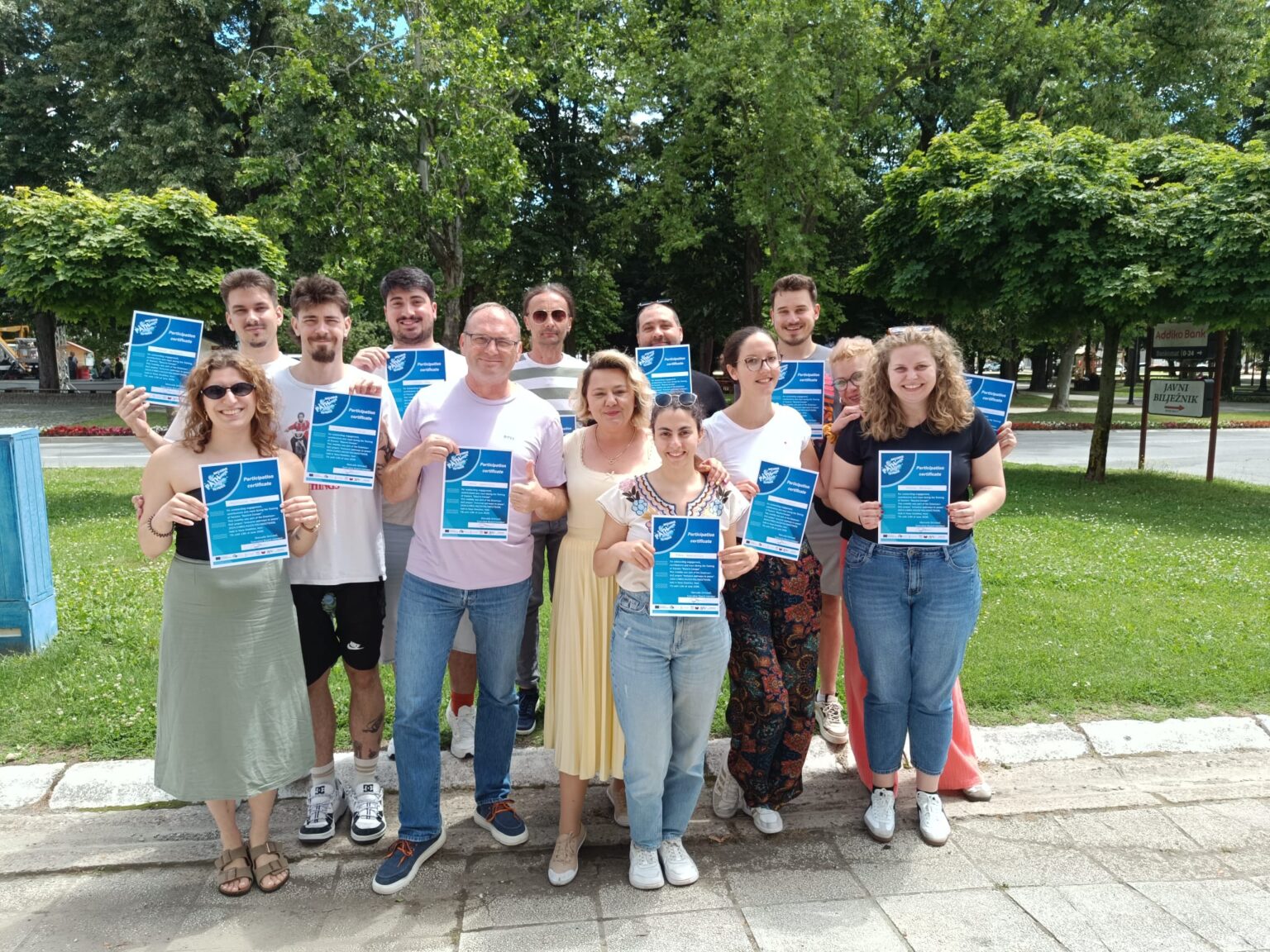
From 7 to 13 June, Studio B Association successfully implemented the “Beyond Escape” Training for Trainers within the Erasmus+ KA2 project “Inclusive Pathways to Peace”
This international event, held in Nova Gradiška, brought together participants from Croatia, Spain, Serbia and Cyprus with the aim of developing skills in innovative peace education and the use of educational escape rooms in local youth work.
After the introductory connection activities and the opening of the main training topics, ranging from social justice and privilege to social equality as a foundation of a culture of peace, the focus shifted to Participatory Action Research (PAR).
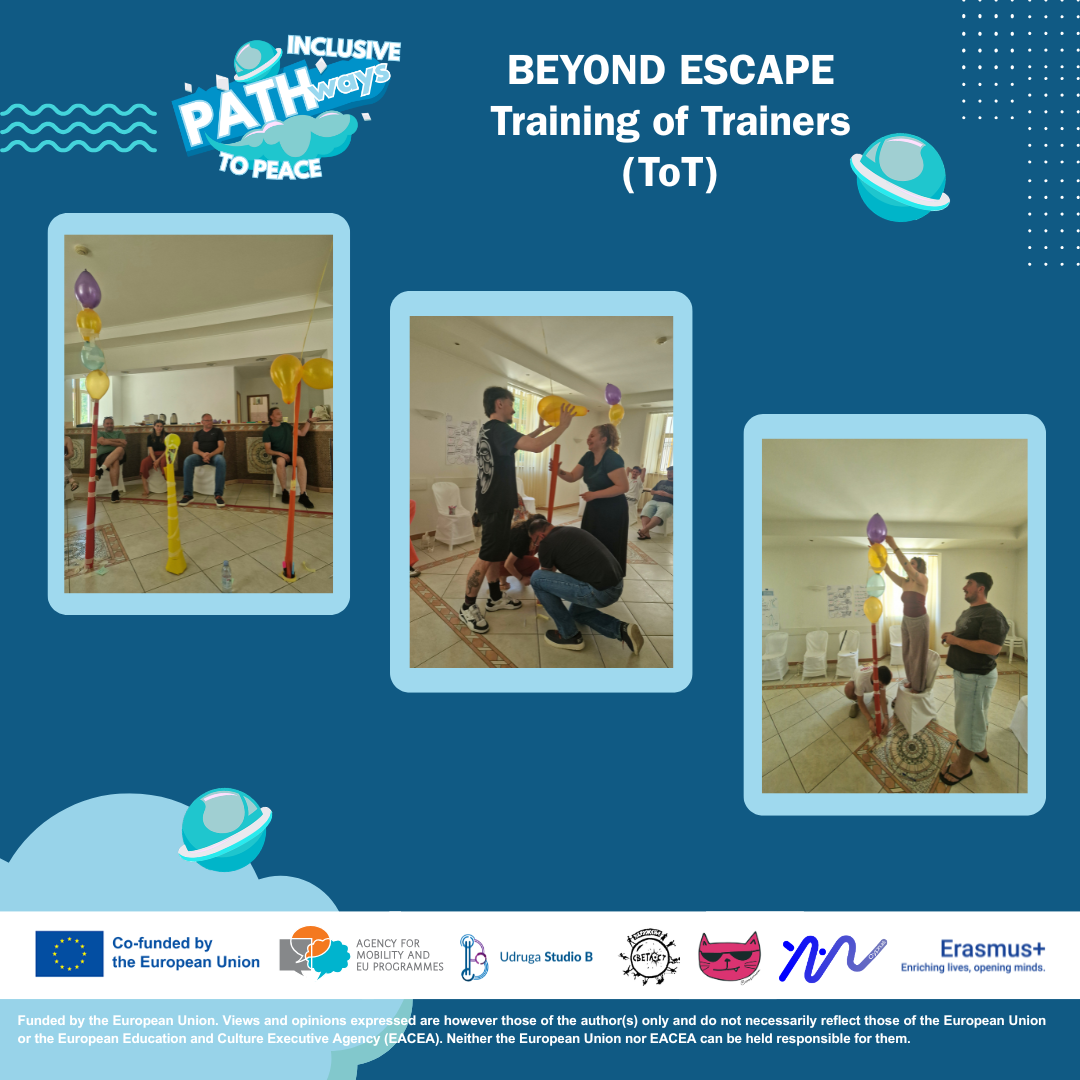
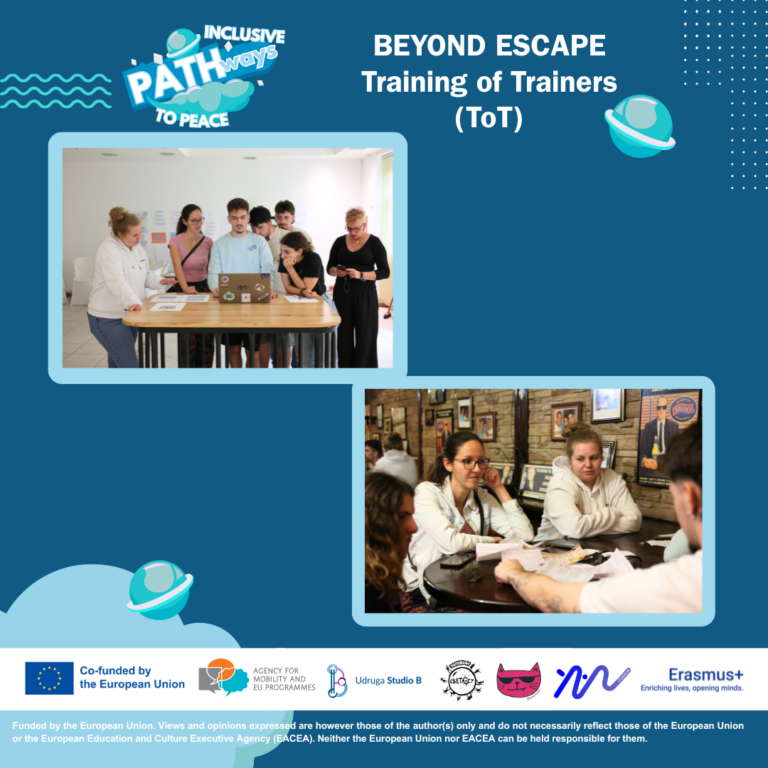
After learning about the basic principles of this newer research approach, as well as its challenges and possible ways of addressing them, the participants also gained practical knowledge and skills. Based on the research findings from the four partner countries, the participants used interactive exercises to map stakeholders, address ethical challenges and design new community interventions responding to the identified issues of peer violence and online hate speech.
By exploring the historical development of human rights, issues related to the Global South, climate change and environmental protection, as well as other components of peace education, the training further emphasized the continuous effort needed to achieve positive peace in society.
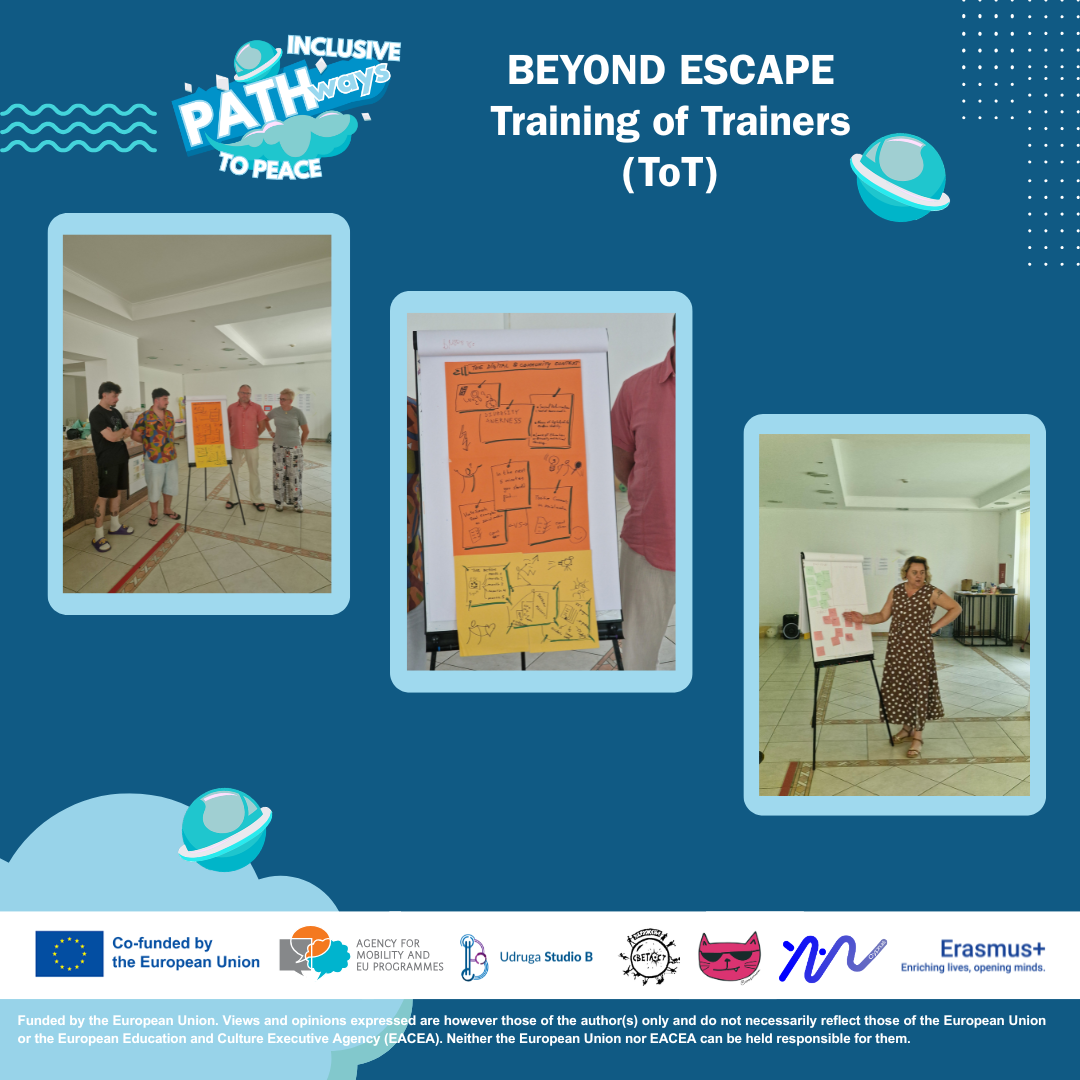
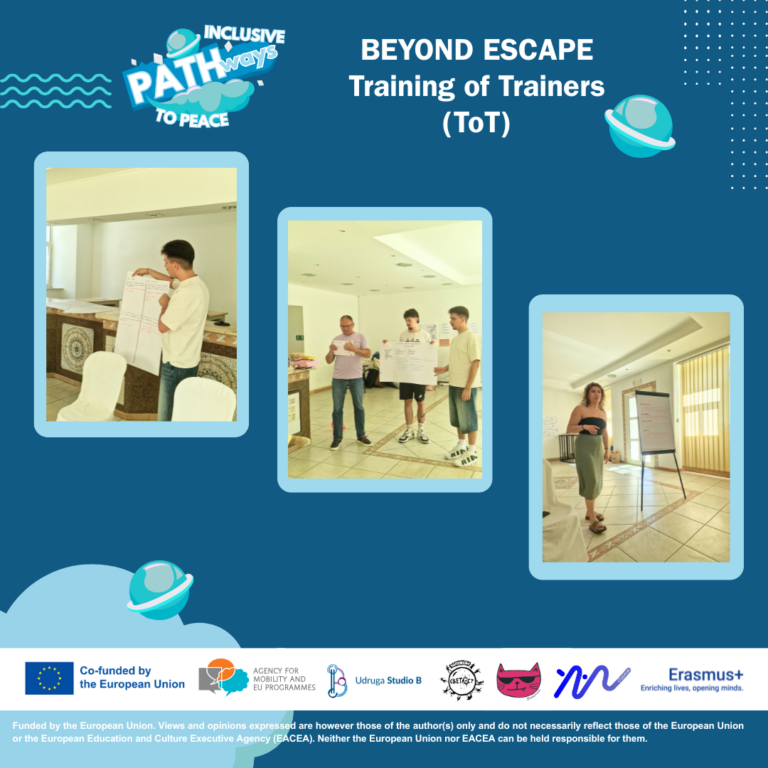
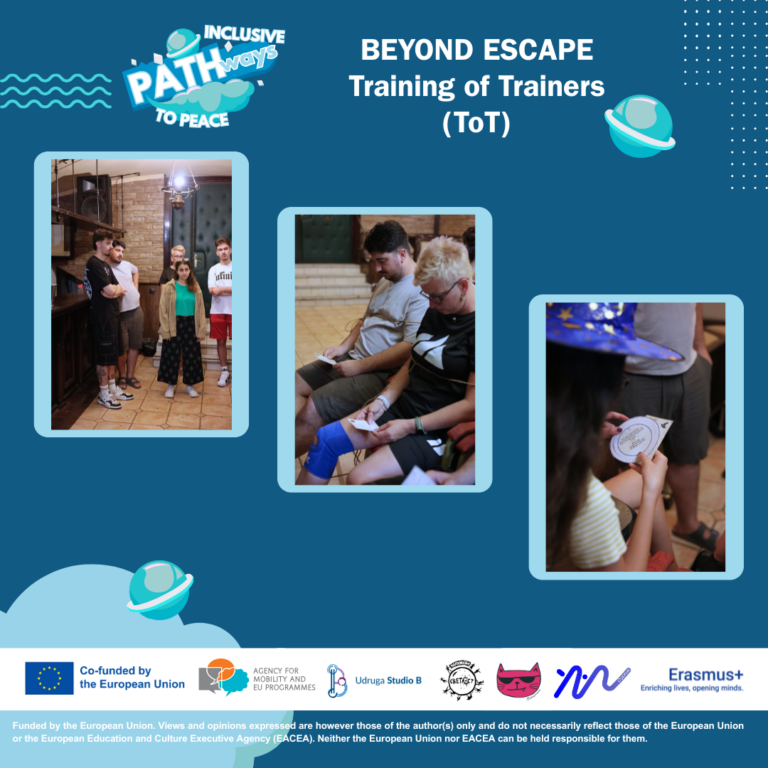
The central part of the training was dedicated to the practical testing of innovative peace education tools through playing and analysing eight educational escape rooms.
The rooms developed in Croatia focused on emotional intelligence and the recognition of discrimination, while the rooms from Serbia emphasized conflict resolution and the development of solidarity. The Spanish rooms explored the marginalization of people living in poverty and the importance of nonviolent communication, while the Cypriot rooms confronted participants with bureaucratic procedures, institutional discrimination and the history of human rights of marginalized groups.
The purpose of testing and analysing these rooms was to encourage participants to reflect on their attitudes, foster critical thinking and develop empathy through intensive methods of experiential learning. At the same time, the process supported the development of skills needed to multiply the project results, namely to implement these innovative tools – escape rooms – in their own local communities.
The process culminated in the development of participants’ own educational escape rooms, where they integrated the knowledge they had gained into specific stories, puzzles and materials with clearly defined learning outcomes.
The final phase included in-depth reflection, structured according to Kolb’s experiential learning model, during which the participants evaluated the most useful, enjoyable and challenging aspects of the learning process. They also developed plans for applying the acquired knowledge and methods in their everyday work with young people.
The training concluded with the awarding of certificates and a reminder of a powerful message that emerged already on the second day of the training and continues to guide our further work with young people: “We are the experts because we are living it!” – “We, as young people, are the experts on the challenges faced by young people because we live them ourselves!”
Furthermore, we are currently in the process of developing the fourth project result: a guide on how to independently design educational escape rooms on any topic, together with a corresponding e-learning course. This will enable youth workers, educators, trainers, teachers and others who may find it useful to gain this knowledge and these skills, and to improve their work with young people.
In the coming months, we will continue disseminating the project results by distributing the sets and guides needed for the independent implementation of these eight methods to other civil society organizations, schools and relevant stakeholders.
After that, we will enter a comprehensive process of evaluating the overall project implementation through structured in-depth interviews, focus groups, questionnaires and other methods, in order to measure the project’s impact and effectiveness. The findings will then be published in a detailed report.
In this way, the entire implementation process of the project will grow into a sustainable example of good practice that different organizations will be able to use in their work with young people.

Comments are closed